Vad som faktiskt ändras för hölje 3D-skrivare lägenhet 2026
Vad som faktiskt ändras för hölje 3D-skrivare lägenhet 2026
Vad Som Faktiskt Ändras för Hölje 3D-Skrivare Lägenhet 2026
Kort sammanfattning
Kort Sammanfattning
Regulatory Updates: Starting in 2026, 3D printer filament manufacturers and users must adhere to stricter CE-marking regulations for machinery, ensuring safety and compliance with new EU directives aimed at enhancing product safety and environmental standards.
Chemical Composition: There will be enhanced scrutiny on the chemical composition of filament materials, particularly regarding additives and their safety profiles, aligning with EU chemical regulations for internal market harmonization.
Environmental Standards: New environmental standards will require manufacturers to report on the sustainability and biodegradability of filament materials, pushing towards greener alternatives and reducing harmful emissions during production and use.
Praktiska Tips
Certification Verification: Always verify CE markings and accompanying documentation to ensure your 3D printer filament meets the latest safety and quality standards before purchase.
Material Transparency: Look for filaments with clear labeling regarding their chemical composition and additive content to comply with upcoming regulations and ensure safe usage.
Proper Storage: Store filaments in a cool, dry place away from direct sunlight to prevent degradation and maintain their integrity for printing.
Praktiska tips
Så Väljer Du
Research Before Buying: Conduct thorough research on filament types and their compliance with new EU regulations to make informed choices that meet both safety and sustainability criteria.
Check Manufacturer Compliance: Opt for manufacturers who explicitly state compliance with the latest CE standards and environmental guidelines to avoid potential legal issues.
Stay Informed: Keep up-to-date with regulatory changes through official EU channels and industry newsletters to proactively adapt your practices.
Jämförelse
Cost vs. Compliance: Evaluate whether investing in newer, compliant filaments might incur higher costs initially but ensures long-term compliance and safety benefits.
Material Performance: Compare the performance of different filament types under new standards to identify the best balance between functionality and regulatory adherence.
Environmental Impact: Consider the environmental impact of filament choices, favoring those that align with EU sustainability goals to contribute positively to broader ecological objectives.
Så väljer du
Vanliga Frågor
Varför Fäster Inte Forsta Lagret?
Regulatory Changes: New regulations mandate stricter adherence to safety standards, which may include enhanced filament stability features to prevent jamming issues.
Design Improvements: Manufacturers are continuously improving printer designs to better accommodate filament types, reducing the likelihood of jams due to material inconsistencies.
Vad som faktiskt ändras för hölje 3D-skrivare lägenhet 2026
Jämförelse
Behövs Slutet Hölje Hemma?
Local Storage Benefits: Storing filament locally can help manage inventory more effectively and ensure you always have access to the specific filament type needed for ongoing projects.
Regulatory Compliance: Local storage might be required for certain compliance documentation related to chemical additives and safety certifications.
Hurförvarar Jag Filament så Det Inte Blir Sprött?
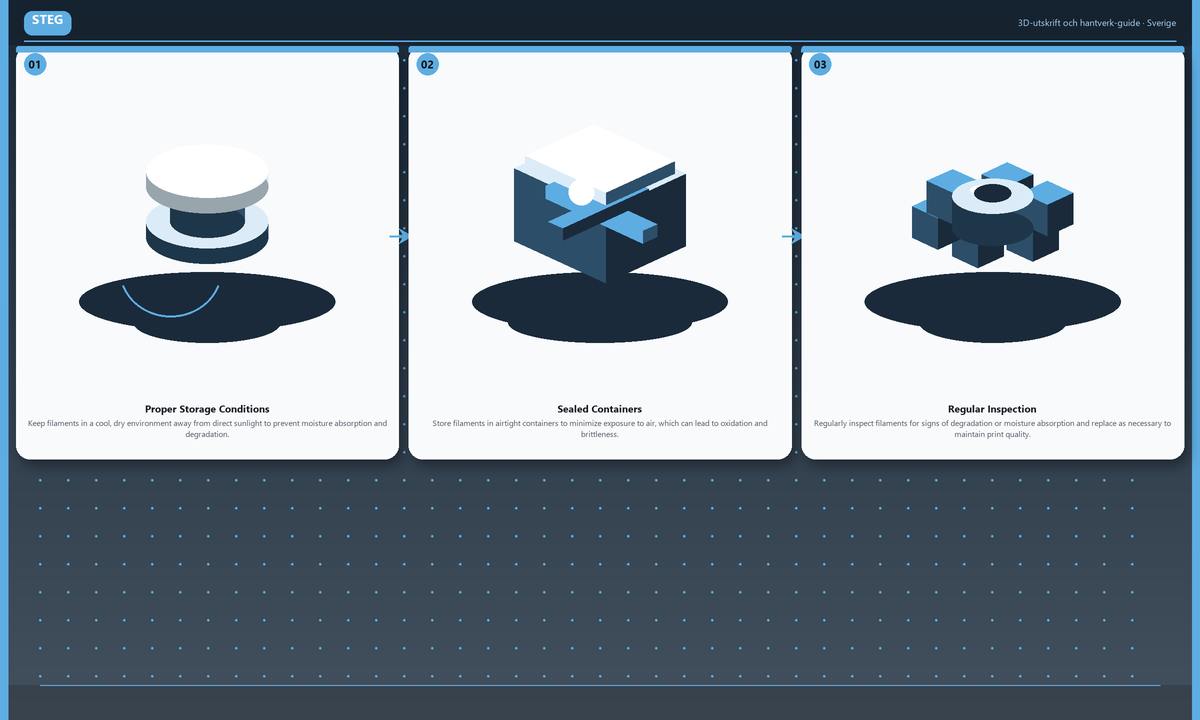
Proper Storage Conditions: Keep filaments in a cool, dry environment away from direct sunlight to prevent moisture absorption and degradation.
Sealed Containers: Store filaments in airtight containers to minimize exposure to air, which can lead to oxidation and brittleness.
Regular Inspection: Regularly inspect filaments for signs of degradation or moisture absorption and replace as necessary to maintain print quality.